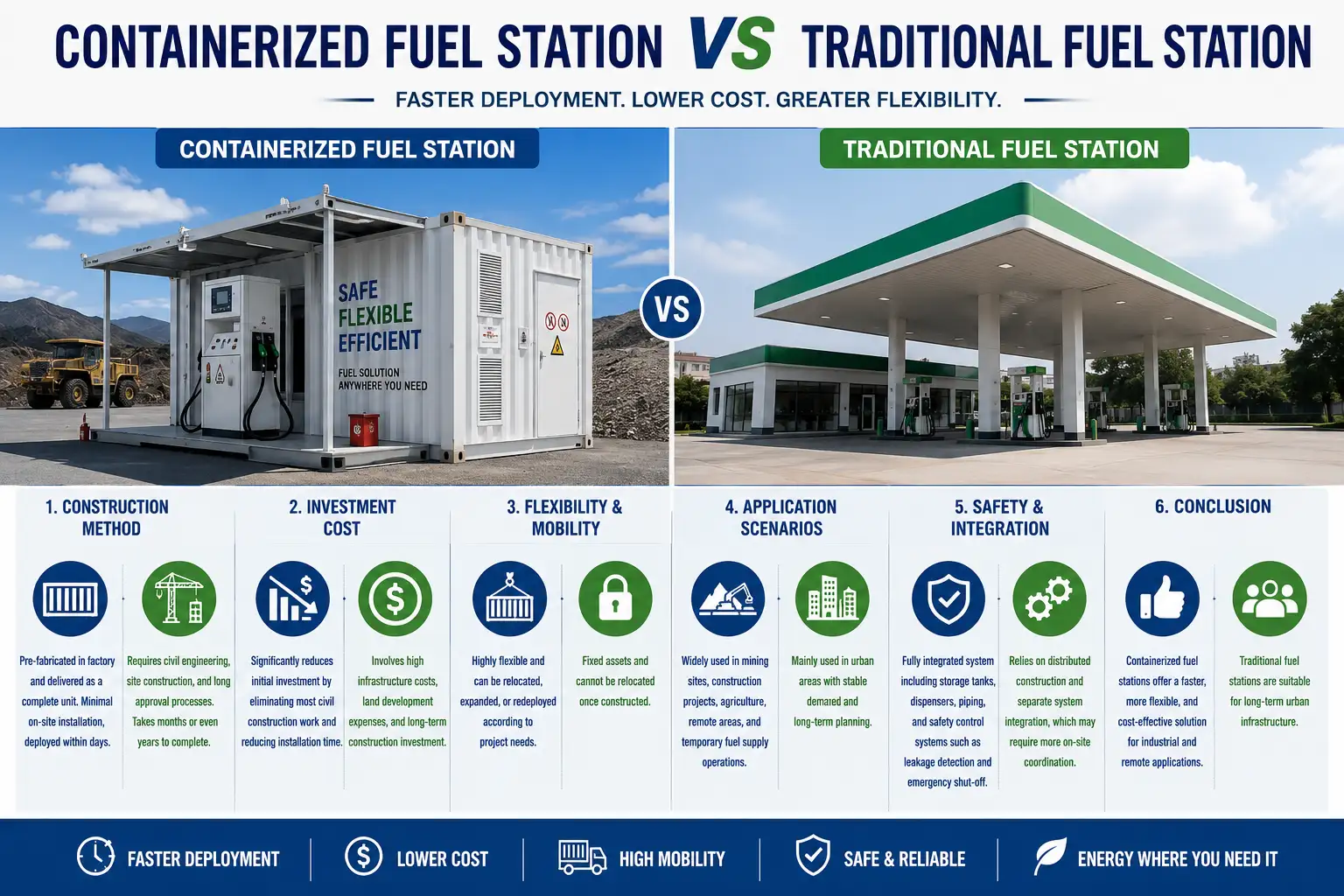
With the rapid development of energy supply infrastructure, different fuel station models have emerged to meet varying operational needs. Among them, containerized fuel stations and traditional fuel stations represent two very different approaches in design, construction, and deployment.
1. Construction Method
A traditional fuel station requires civil engineering work, including underground piping, concrete foundations, site construction, and long approval processes. It often takes months or even years to complete.
In contrast, a containerized fuel station is pre-fabricated in a factory and delivered as a complete integrated unit. It requires minimal on-site installation and can be deployed within days.
2. Investment Cost
Traditional fuel stations involve high infrastructure costs, land development expenses, and long-term construction investment.
Containerized fuel stations significantly reduce initial investment by eliminating most civil construction work and reducing installation time.
3. Flexibility & Mobility
Traditional fuel stations are fixed assets and cannot be relocated once constructed.
Containerized fuel stations are highly flexible and can be relocated, expanded, or redeployed according to project needs.
4. Application Scenarios
Traditional fuel stations are mainly used in urban areas with stable demand and long-term planning.
Containerized fuel stations are widely used in mining sites, construction projects, agriculture, remote areas, and temporary fuel supply operations.
5. Safety & Integration
Modern containerized fuel stations are fully integrated systems, including storage tanks, dispensers, piping, and safety control systems such as leakage detection and emergency shut-off.
Traditional stations rely on distributed construction and separate system integration, which may require more on-site coordination.
6.Conclusion
In summary, traditional fuel stations are suitable for long-term urban infrastructure, while containerized fuel stations offer a faster, more flexible, and cost-effective solution for industrial and remote applications.
Related Services
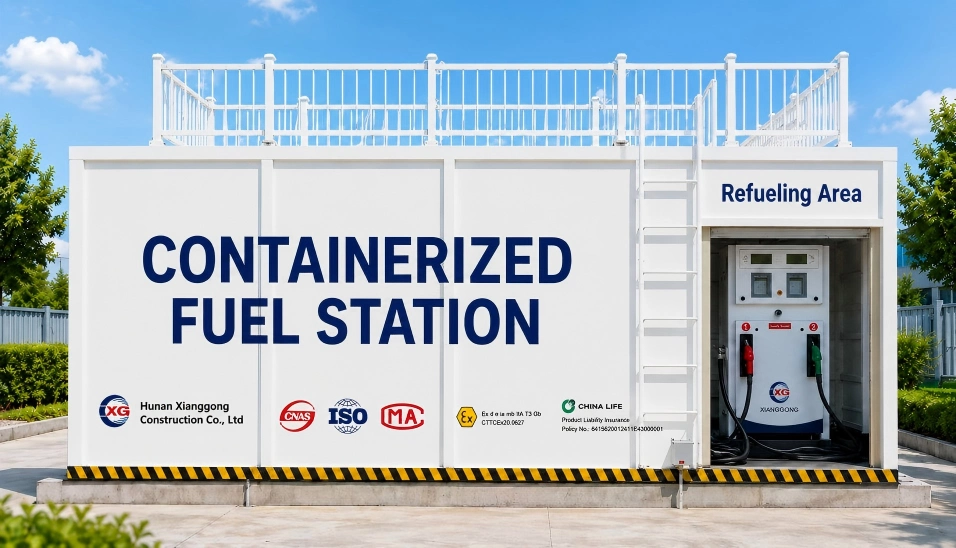
Containerized Fuel Station Solutions
containerized-fuel-station-solutions
View Detail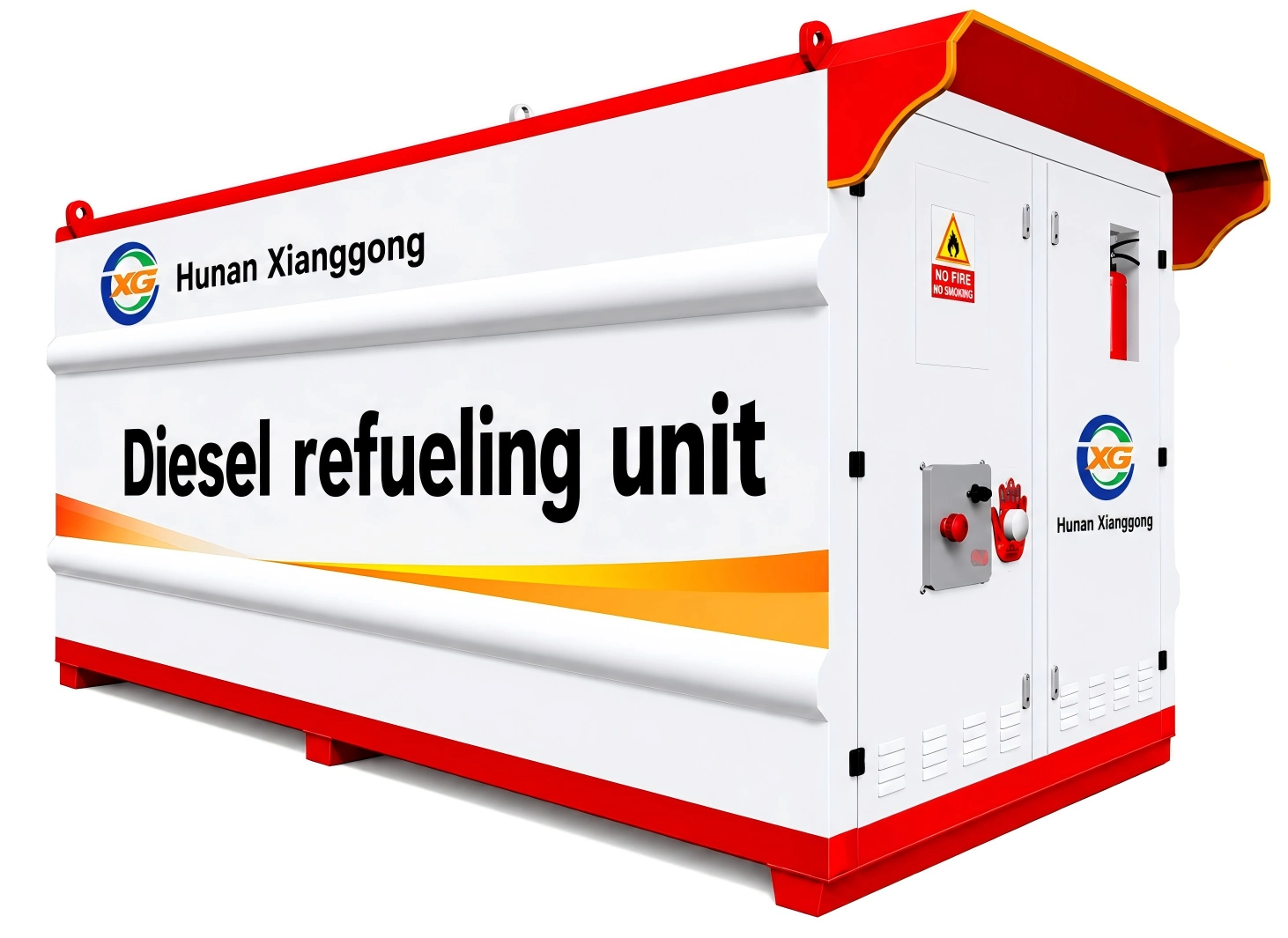
Mini / Portable Fuel Station
Mini / Portable Fuel Station
View Detail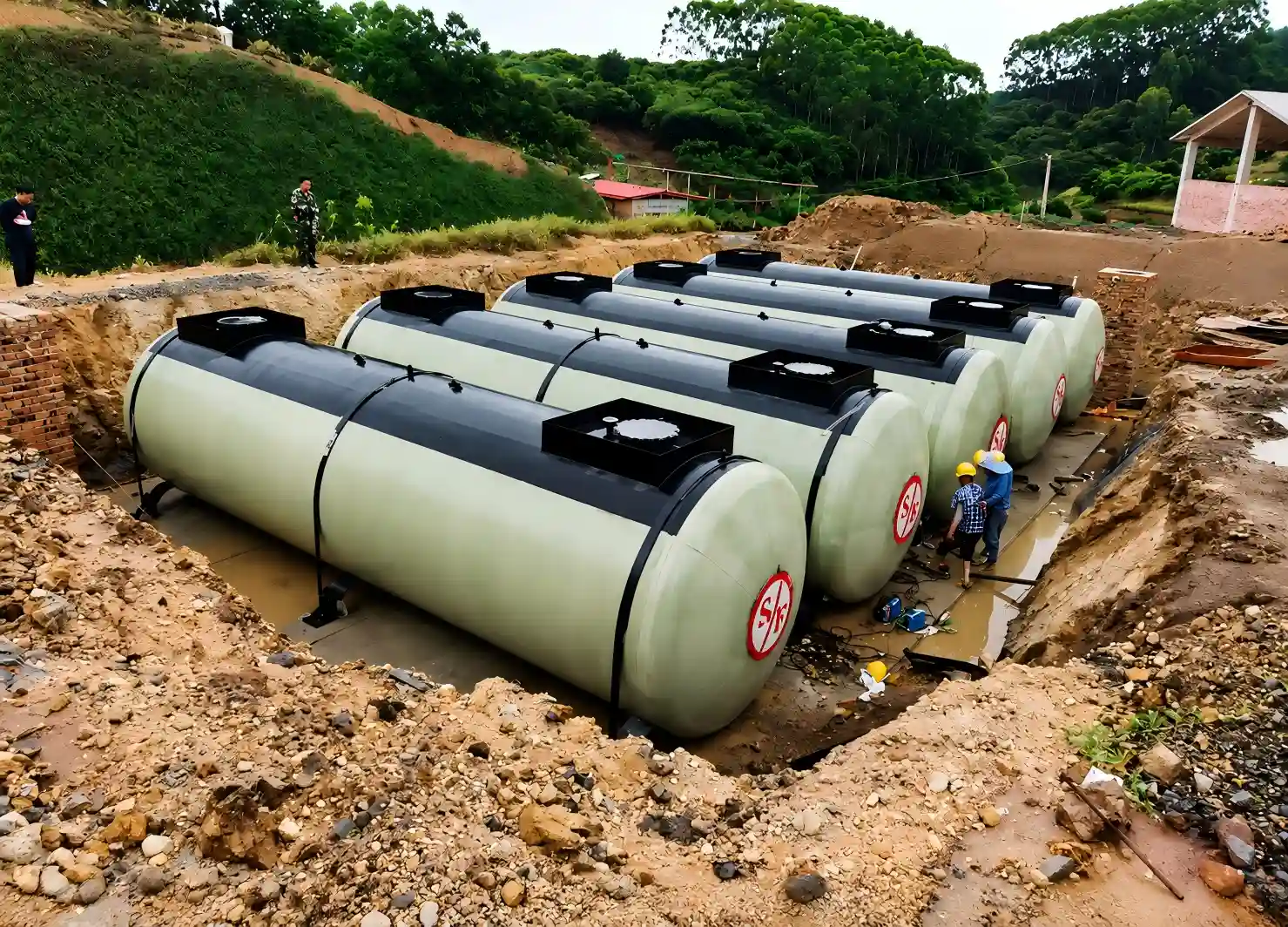
Underground SF Double Wall Tanks
Underground SF Double Wall Tanks
View Detail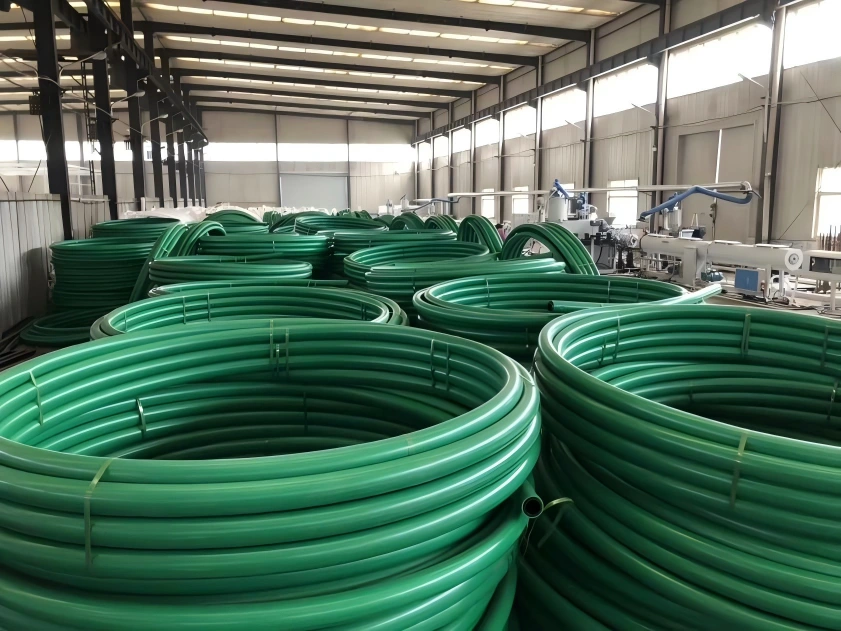
HDPE Double Wall Fuel Piping
HDPE Double Wall Fuel Piping
View Detail